Your first camper, without the guesswork.

Everything we'd tell you standing on the lot — tow math, inspection tricks, real budgets — in one place. Read it before you browse, then come argue with us about it.

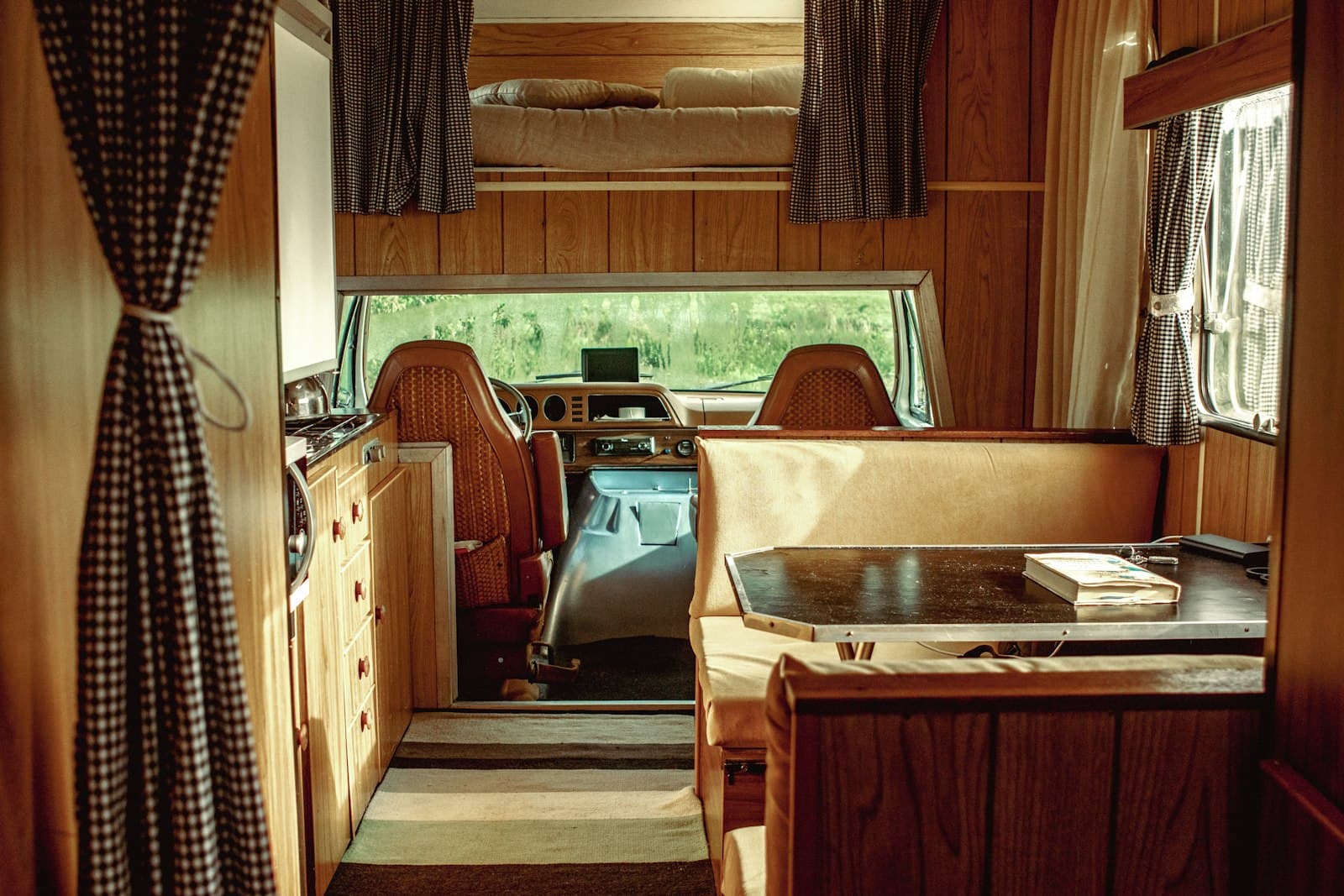
Inside a travel trailer with the dinette set up

Start with how you'll use it

Before looking at a single listing, answer one question honestly: where will you sleep? Weekends at state parks, two-week cross-country runs, and tailgating at Ford Field are three completely different campers.

Weekend warriors who stay in campgrounds with hookups do well with lightweight travel trailers under 24 feet — easy to tow, cheap to store, enough room for a family of four. Full-timers and long-trip people should look at fifth wheels or Class A motorhomes with real storage. If you mostly want a base camp you drive to, a camper van or Class C is the move.

Tow vehicle math comes first

Every listing tells you the weight. Your vehicle's door jamb sticker tells you what you can pull — and the honest number is the lower of the two when the trailer is fully loaded with your water, gear and food.

Rule of thumb: keep the loaded trailer under 80% of your tow vehicle's capacity for a comfortable first year. A half-ton truck opens up most 24–28 foot trailers; a midsize SUV is happier under 5,000 lb. If you don't have a tow vehicle, budget for one before you budget for the camper.

Budget beyond the sticker

The purchase price is roughly two-thirds of year-one cost. The rest: insurance ($800–1,500 annually), storage if your driveway won't work ($100–250/month), hitch and weight-distribution setup ($600–1,200), and the first round of hoses, levels, batteries and blocks ($300–500).

Used is where the value is. A three-year-old camper typically sells for 70–75% of what it cost new — and someone else already absorbed the steepest part of the depreciation curve and found whatever the warranty had to fix.

What to inspect (beyond our 120 points)

Water is the enemy. Check the roof for cracked sealant, the ceiling inside for staining or soft spots, and around every window and door for caulk that's pulled away. Run every faucet and flush every toilet — then look underneath for drips.

Then the systems: run the fridge on both propane and electric, fire the furnace and the water heater, extend and retract every slide twice, run the awning out and back, and test every outlet and the GFCI. Turn the water pump on and walk away for ten minutes — listen for it cycling when nothing is running.

And the unglamorous parts: tire date codes (replace anything over seven years regardless of tread), bearing play on the hubs, brake condition, and the underside for rust that goes deeper than surface scale. Michigan winters are hard on frames — we show you the underside on every unit.

Paperwork without surprises

You need three things: a clean title in the seller's name that matches their ID, a bill of sale with the VIN, and — in Michigan — a title transfer filed within 15 days. Sales tax is due at registration, not at the sale.

Get any promised repairs or warranty coverage in writing on the bill of sale. Verbal promises evaporate the moment the keys change hands. Ask specifically for the inspection report, maintenance records and any recall completions.

Your first visit to our lot

Come with comfortable shoes and about 90 minutes. Start by climbing inside two or three units — you'll learn your deal-breakers faster from standing in them than from scrolling photos. We'll pull out the inspection report for anything you're serious about.

There's no appointment needed and no pressure to decide. Most first-timers visit twice: once to narrow down the class, once to pick the unit. That's the right pace for something you'll tow for a decade.

Six words worth knowing.

GVWR
Gross vehicle weight rating — the maximum loaded weight of the trailer, axle rating included.
Hitch weight
The downward force the trailer puts on your tow hitch. Determines which weight-distribution setup you need.
Slide-out
A wall section that extends outward at camp to add interior floor space.
Dry weight
Weight with no fluids or gear — always lower than what you'll actually tow.
30-amp / 50-amp
Shore power service levels. 30-amp is standard for most trailers; 50-amp supports two AC units.
Black / gray tank
Wastewater holding tanks — black is the toilet, gray is sinks and shower.

Ready to walk the lot?

Bring this guide and your tow vehicle's numbers. We'll do the math with you.