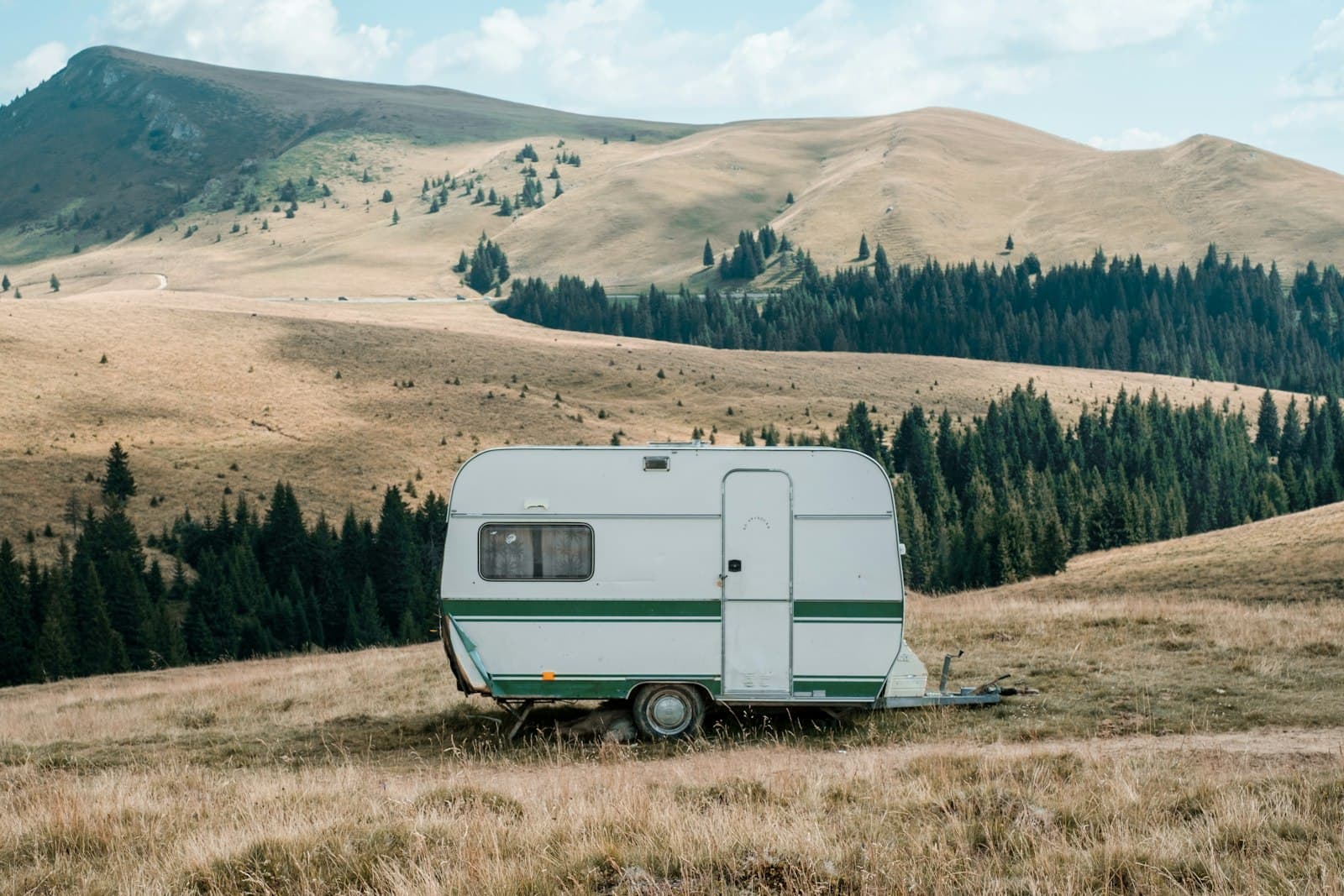
The sticker price is the part everyone budgets for. It is also, over five years, the smaller part.
We sell a lot of first-time units on this lot, and the ones that come back for trade-in after two seasons almost always share a story: the camper was affordable, and the ownership was a surprise. None of the numbers below will shock you individually. Seeing them in one column is the point.
The fixed costs, whether you camp or not
Insurance. Towed trailers run the cheapest — figure $600 to $1,200 a year for full coverage on a $25,000 unit. Motorhomes climb steeply: a Class C runs $1,200 to $2,500, and a Class A with storage coverage can reach $4,000. Full-timers living in the unit need a different policy again — a homeowners policy will not cover a residence on wheels.
Storage. If your driveway will not hold it, this is the bill nobody shops for. Outdoor fenced slots in Michigan start around $30 to $50 a month. Covered runs $80 to $150. Indoor, climate-controlled can hit $400. For a seasonal owner paying six months of covered storage, plan on $500 to $900 a year.
Registration and tags. Michigan plates on a travel trailer run $100 to $250 depending on weight; motorhomes register as vehicles and cost more. Budget $150 to $400 a year.
Depreciation. The big one, and the reason we push used. A new camper loses 20 to 30 percent the moment it leaves the lot, and keeps sliding for the first five years. A three-year-old unit has already absorbed that hit — someone else paid the depreciation tax on your behalf. This is genuinely the largest line in most RV budgets, and buying used is the only real lever you have on it.
The costs that track how much you use it
Maintenance. The old rule — one percent of the unit's value per year — lands around $500 to $2,000 for most campers. Realistic annual spend: roof seal recaulk ($150–$400), bearing repack and brake service ($200–$400), winterization ($150–$300), propane and battery work ($100–$300), plus a repair reserve. The reserve is the line people skip. Appliances do not care about your schedule — a fridge board or a slide motor will find you.
Campground fees. State park basic sites run $20 to $40 a night. Full-hookup private parks run $50 to $80. Resorts with pools and activities run $80 to $150. Weekly and monthly rates soften it substantially — monthly rates in many parks are a third of the nightly math. Thirty nights a year at an average private park is $1,800; living in the unit full-time on monthly rates can land under $1,000.
Fuel. Tow vehicles: 8 to 12 mpg pulling a 25-foot trailer is realistic. Class A motorhomes: 6 to 10. Class C: 8 to 14. Camper vans and Class B: 18 to 22. Every long tow is a real number worth knowing before you book a 900-mile trip.
The arithmetic that matters
A travel trailer used six weekends a year, stored covered, insured, tagged and maintained comes out around $3,500 to $6,000 once depreciation is included. Ten weekends at private parks with fuel for the tow vehicle pushes that toward $8,000.
Is it worth it? That depends entirely on how you use it. What we will say is that the owners who stay happiest are the ones who walked in knowing these numbers — because the camper never surprised them. Ask us for the real figures on any unit on the lot, and we will run them with you before you fall in love with the floorplan.