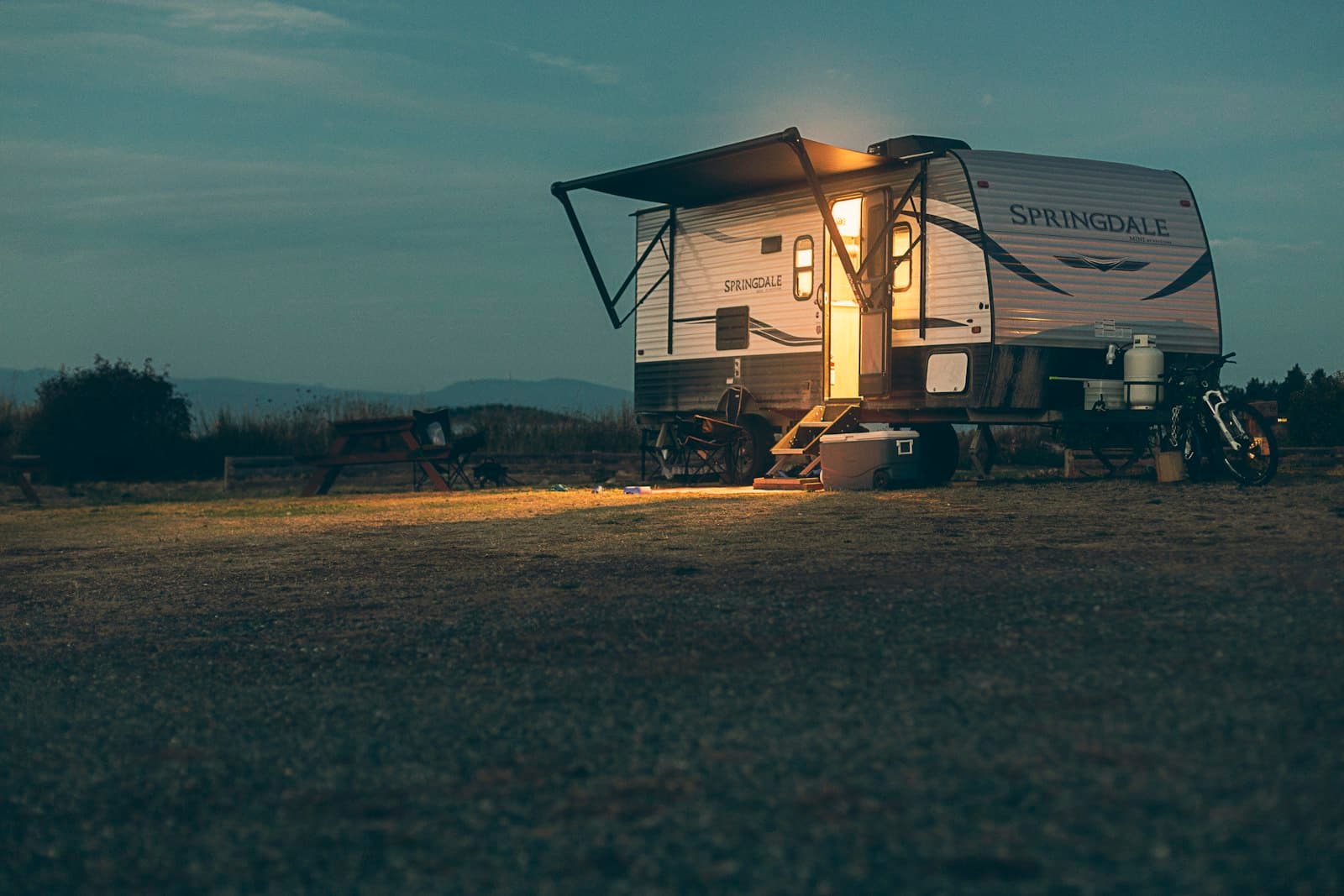
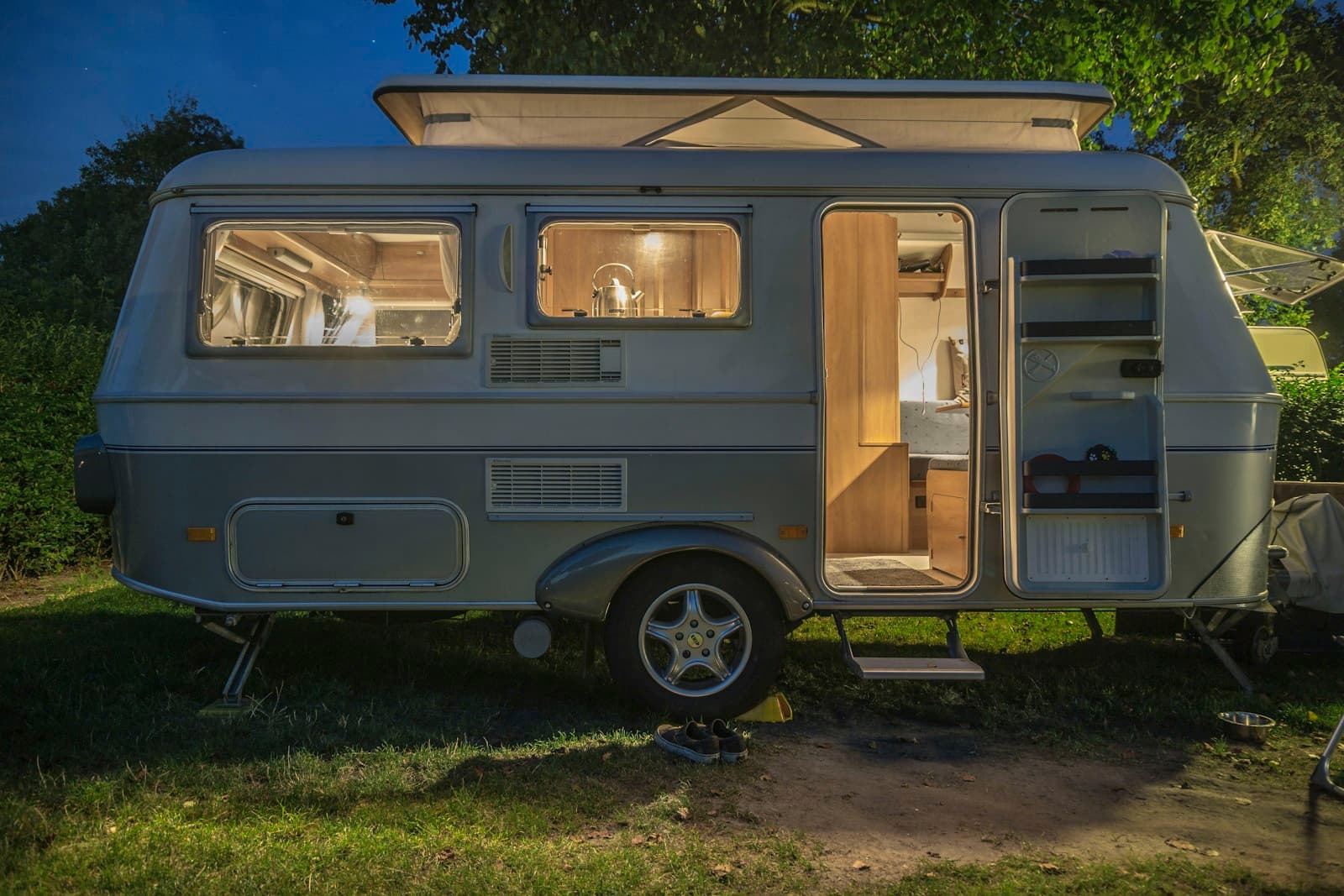
Every season somebody walks onto the lot ready to buy a rig for full-time living, and we ask the same three questions first: where will you get mail, how will you work, and what is your plan for a month of rain in February?
Full-timing is achievable on a normal budget. It is also a logistics project, and the logistics are what wash people out — not the romance of the road.
The money, without the daydream
Published cost surveys land in a consistent band: $1,000 to $4,000 a month, all in.
- Boondocking on public land — the low end. Free or $10 to $20 a night in dispersed areas, no hookups, solar and tanks carry you. Frugal full-timers run $1,000 to $1,600.
- Monthly rates at private parks — the middle. Full hookups, laundry, often wifi and a pool. $500 to $1,500 a month plus utilities pushes total spend to $2,000 to $3,000.
- Resorts, snowbird season and nightly rates — the top. Booking nightly at $70 to $120 and moving often can reach $4,000.
Inside that: campground or lot, fuel, insurance, groceries (unchanged from a house), phone and data, and a repair reserve. The reserve is non-negotiable — a slide motor does not care that you are between paychecks.
The three decisions that decide your first year
1. Rig size, honestly. Full-timers overwhelmingly recommend *smaller* than their first instinct. Tight squeezes, mountain passes and state park pads all get harder with length. Bigger also means more to heat, cool and park. The second most common regret we hear is buying the big fifth wheel; the first is buying one too small for two people's stuff.
2. Connectivity. If you work remotely, this is infrastructure, not a perk. Cellular with a real hotspot plan is the baseline; satellite internet has made remote work viable in places it was not three years ago. Budget $80 to $200 a month and test your provider in the areas you plan to sit for weeks at a time.
3. Mail and domicile. You need a permanent address for registration, insurance, voting and taxes. A mail service in a state like Texas, Florida or South Dakota handles forwarding; your domicile state decides income tax. This is worth doing with a CPA once, rather than improvising at every border.
Healthcare, work and the boring parts
Employer coverage that travels with you is the easy path. Otherwise, marketplace plans are state-specific, which ties back to the domicile decision. Seasonal workamping — campground hosting, labor rallies, Amazon peak season — trades hours for a site, which can erase the single biggest monthly cost.
Vehicle registration, driver's license renewal and mail forwarding all run off that domicile address. Put all three on one calendar reminder.
What we tell buyers on this lot
Start with a used unit. The depreciation you avoid by buying three years old is a year or more of living expenses, and the first year of full-timing is when you learn what you actually need. Check every appliance runs under load, insist on the roof and water report, and make sure the tires date within the last five years before you commit to a 12,000-mile year.
Then go. The owners who make it past year two are the ones who stopped researching and started adjusting — because month four on the road teaches you more than four years of forums.